

Why are there so many different courts?

Throughout the United States, there are courts with different responsibilities and authority. The courts derive their authority from state and federal constitutions, and from laws passed by state legislatures and Congress.
Each court has specific cases that it can hear, as well as a higher court (appellate court), which reviews lower court decisions. This is referred to as a court′s jurisdiction. For example, a justice or municipal court may only deal with misdemeanor violations of city laws or small-dollar civil lawsuits, not felonies or high-dollar cases.
There are basically two court systems in the United States: state and federal. Each is divided into three levels. The lowest is the trial court, and the second and third levels are appellate courts. Various lower courts exist, such as the municipal court, justice court, and police court. Each of these has specific subject matter jurisdiction. Only those cases that the law designates may be heard in each court.
In 2002, the following numbers of cases were filed in U.S. trial courts:
- Civil: 22 million
- Criminal: 15 million
- Traffic: 55 million
- Juvenile: 1.6 million
Sources: Juvenile Offenders and Victims: A National Report, National Center for Juvenile Justice (2006); State Court Caseload Statistics (2002), National Center for State Courts
The basic structure of the court system remains stable—trial courts with one or two levels of appellate courts. However, with a growing population and an increase in the number of lawsuits filed, more judges and courts are needed at all levels.
In trial courts and lower courts, juries are called to hear the evidence and decide the case. At the trial court level, witnesses testify, exhibits are introduced, and the attorneys argue the case. Once the case is concluded, either the court or the jury decides what the facts are and applies the law to the facts. The losing side may appeal the decision to a higher court.
A fairly recent phenomenon is the presence of television cameras in the courtroom. In the interest of public education, an open society, and the “right to know,” some courts have opened their doors to the public and allow the proceedings to be broadcast on television. It′s a judge′s decision on a case-by-case basis whether to allow media coverage. Adoption, dependency, and mental health cases are usually closed hearings.
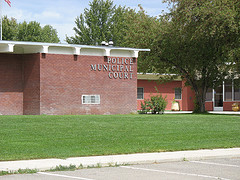
Photo by Teofilo (Flickr)
Each level of court has its own judges and its own qualifications to become a judge. You don′t necessarily have to be a lawyer to become a judge. Depending on where you live, you′ll either have to run for office or seek to be appointed. Generally, a higher degree of education is required for judges in courts responsible for higher-dollar lawsuits. Many judgeships require a minimum of law school, state bar admission to practice, and three to five years of legal practice.
 “Injustice anywhere is a threat to justice everywhere.” -Dr. Martin Luther King, Jr.

Why are juries only used in trial court?
Dear Anne: It is because our system of justice is set up for a group of your peers decide the facts of a criminal or civil case, and then apply the laws to those facts to reach a verdict. There is only a need to have one jury come to this decision, and if any errors were made, for an appellate court to review the decision and either affirm it, modify it or reverse it. It’s a system that has worked for hundreds of years. Thanks for asking.
(This is information only – not legal advice).