

Is it a crime to swear at a school principal?
At an evening forum for parents and students in September, 2009, Cindy Schwalb spoke her mind. She was upset at the school’s handling of a “pantsing” trend going on at Hasbrouck Heights Middle School. Cindy’s 13 year old daughter had her sweatpants pulled down by a boy.

Cindy Schwalb (Facebook)
During the forum, Cindy cursed at the principal. She was charged with disorderly conduct and appeared in court in January, 2010. She pleaded not guilty and faces a maximum of 90 days in jail and a fine. School officials and the prosecutor are taking the unusual step in prosecuting her to show that people can’t call school principals vulgar names. Adults as well as students are bound to follow the law – it should be applied equally to all offenders.
Disorderly conduct is generally defined as disturbing the peace of another, unruly conduct or behaving in a disruptive manner. Someone who knowingly, intentionally or recklessly engages in fighting, making unreasonable noise after being warned, or disrupts a lawful assembly may be charged with disorderly conduct.
Can you get in trouble for swearing at your teacher?
In January, 2011, the Arizona Supreme Court overturned the delinquency finding of a teenager who insulted his teacher in class. He called her a “stupid bitch” and a “f______ bitch.” He was given a 10-day suspension and found guilty of abusing a teacher, a misdemeanor. He appealed his adjudication and the court reversed the decision stating that “We do not believe that his insults would likely have provoked an ordinary teacher to exchange fisticuffs with the student or to otherwise react violently.” The court based its decision on the U.S. Supreme Court’s analysis of “fighting words” – those words that would provoke an immediate violent reaction from the target of the speech. The school’s discipline was appropriate, but the delinquency finding couldn’t stand.
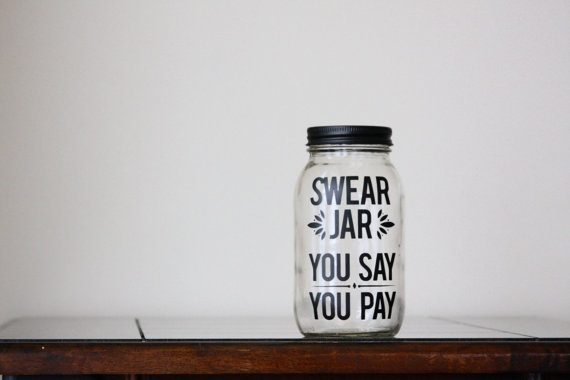
Photo via Thebrokeassbride.com

So you don’t get in trouble?
Dear Brick: Yes, you can get into trouble. The Arizona case referred to in this post discussed a “delinquency” finding in court for swearing at a teacher. This means that something like criminal charges were filed against the student for swearing at his teacher in addition to school sanctions being implemented (10 day suspension, etc.). The Arizona court found that the school’s punishment was just, but the court punishment which went on the student’s criminal record, was reversed. Ultimately, you can face consequences for swearing at a teacher whether you’re an adult or student. If you’re a student, the consequences you face will most likely be through the school like detention or suspension and not through the court. Thank you for your question.
(Check our Teen Help Network for more help and resources in your area. This is information only – not legal advice.)
Somewhere in the South, I want to say Louisana? a man was charged at a public meeting of the town and swore at the mayor, he was charged, spent time in county and was ordered to pay a fine. The next level of court found him not guilty under freedom of speech, that the disruption was caused by the mayor having him arrested, not his speech. The point being that you have the right of freedom of speech. They never define disruption. This is also probably is challengeable as specifics are left out of what constituets disruptive. If I make you unhappy was I disruptive? If I proved you were in the wrong, am I disruptive?
Thanks for your thoughts, Linda.